
hexachlorocyc
Tox
polybrominated diphenyl
PolyChlorin
Chlordane
Tributyltin
WIDSTRAND
STAFFAN
yclohexane
xaphene
ethers
nated Biphenyls
furans
Persistent Organic Pollutants
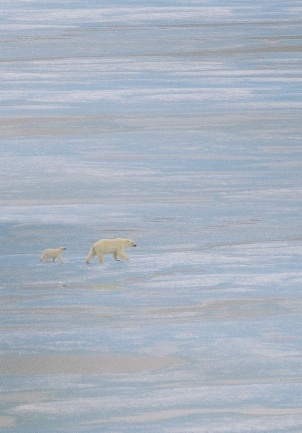
Stiff and lean after six months curled in a den, a female polar bear squeezes herself out of her winter home. Two small
cubs emerge tentatively at her heel for their first view of the world beyond a snow cave. Entirely dependent on their
mother, the cubs follow obediently. Having used up most of her fat stores, the female scans the sea ice below and ponders
a meal of seal blubber. But her cubs are not yet ready to travel, and her milk will have to sustain them for some time to
come. The milk is rich and nourishing but today it also harbors a threat. The seals the mother has feasted on in the past,
and will need again soon, are tainted by chemicals from lands far beyond her sea-ice domain. The chemicals that bind to
the fat of the seals have accumulated in her own fat stores. Unwittingly, the mother passes the toxins to her young in her
fat-rich milk, with effects that are still unclear.
This chapter examines organic chemicals that can affect the health of animals and people, especially those substances
that accumulate in Arctic food webs and that resist degradation. These are often called persistent organic pollutants, or
POPs. A review of known toxic effects and environmental levels of POPs forms the basis for evaluating whether Arctic
wildlife are affected by current levels of contamination. A summary of sources and pathways indicates where the conta-
minants come from. Many measurements of organic contaminants have been made because of concern about high intake
by people, and the human health aspects of these substances are discussed in the chapter Pollution and Human Health.
Most of the persistent organic pollutants are
72
Persistent Organic
Persistent organic pollutants: also fat-soluble. They thus accumulate in the
Pollutants
a background
fatty tissues of animals. Storing energy as fat is
crucial for survival in cold environments, and
In 1945, the booming chemical industry
fat is therefore important in the diets of both
launched a new, effective tool for dealing with
people and animals, which also increases the
insect pests: DDT. It held great promise,
intake of these pollutants.
including the hope of saving crops and of erad-
The combined characteristics of being fat-
icating disease-carrying insects. Twenty years
soluble and persistent make biomagnification a
later, DDT and other, similar chemicals had
major concern. Biomagnification is the
indeed benefited agriculture and relieved some
increase in contaminant load as predators take
of the problems associated with insects in
on the chemicals eaten by their prey, thus fur-
many areas of the world. The price of these
ther concentrating the toxic material at each
gains, however, was becoming increasingly
successive level of the food web. For a detailed
clear: DDT is toxic to many more organisms
discussion of this process, see the chapter
than those it was intended to kill. In particular,
Polar Ecology. Indeed, the highest levels of
birds of prey had trouble reproducing, and
persistent contaminants are usually found in
their populations declined in many polluted
top predators. Studies of species at different
areas of the world.
levels of an Arctic marine food web show that
As early as 1970, when it was detected in
each step can mean a several-fold increase in
the blubber of ringed seals, it was evident that
body burdens of organic contaminants.
DDT was present in the Arctic. By the mid-
1970s, researchers had documented the pres-
A broad attack on reproduction
ence of DDT and other pesticides in beluga,
polar bear, and fish. Moreover, birds of prey
Many of the most visible effects of POPs on
declined in northern areas that were thought
animals are related to the ability to conceive
to be uncontaminated.
and raise young. For example, the early de-
In addition to pesticides, most analyses in
clines in birds of prey were caused by thinning
animals also found traces of an industrial oil
of their eggshells, which made it impossible for
made of compounds known as PCBs. By 1980,
the birds to hatch their chicks successfully.
there was evidence that some of these contami-
POPs may also be directly toxic to developing
nants had reached the Arctic via long-range
chicks, killing them in the egg. A more subtle
transport. In the late 1980s, it became clear
effect is seen in adult birds, when normal mat-
that human mother's milk at Broughton Island
ing behavior is impaired.
in the Northwest Territories in Canada con-
The effects of POPs on mammals are well
tained enough PCBs to cause concern about
documented in polluted areas such as the
effects on human health. The most likely
Baltic Sea. Malformations in reproductive
source was the food the women had eaten.
organs, fewer young, or even complete failure
DDT and a number of closely-related pesti-
to reproduce are some of the detrimental signs
cides have been banned for two decades in the
of high contaminant levels.
circumpolar countries, but long-range trans-
One of the underlying causes of failure to
port makes the issue a global one. While PCBs
reproduce is that some of the chemicals inter-
are no longer manufactured in any of the cir-
fere with sex hormones. Such hormone dis-
cumpolar countries, they are still in use in
rupters can mimic or block hormones because
many closed systems, and leaks and disposal of
they are similar enough in structure to fit into
old stores remain a problem. New chemicals,
the body's biochemical receptors.
with unknown effects on Arctic animals, are
Contaminants that block the estrogen receptor
also entering the scene.
can inhibit the growth of the reproductive
tract and the mammary glands, which mam-
mals require to maintain pregnancy. In fish,
The biological effects
the same receptor stimulates the production of
of POPs
a precursor to egg yolk. Under normal condi-
tions, the yolk precursor is only present in
Organic contaminants in the Arctic environ-
females, but in contaminated waters it is also
ment share many characteristics that make them
found in males. Some of these measurable bio-
especially insidious for people and wildlife.
logical effects are now used as sensitive tests to
determine whether a specific compound is a
hormone disrupter.
POPs are stored in fat and are persistent
Sex hormones are important for the normal
A common characteristic of most synthetic
sexual development of young animals. In pol-
organic chemicals found in Arctic animals is
luted temperate environments, high levels of
that they break down very slowly. This persis-
hormone disrupters have been connected to
tence in the environment allows them to accu-
malformations in reproductive organs, change
mulate in animals, and to pass through the
of sex in some species, and abnormal mating
food web.
behavior.
Vitamin A. Imbalance in Vitamin A can sup-
The immune system is very sensitive
73
press the immune system, increase susceptibil-
Persistent Organic
One of the most sensitive targets for organic
ity to cancer, cause skin lesions, and disrupt
Pollutants
contaminants may be the immune system, the
reproduction, growth, and development.
body's primary defense against disease. The
Many POPs can damage the adrenal gland.
thymus, which normally produces antibodies
Seals in the Baltic Sea suffer from a series of
to fight infectious agents, can waste away and
diseases that are connected to adrenal gland
cease to function. POPs also limit cell-medi-
effects. These diseases include malformations
ated immunity, the branch of the immune sys-
of the uterus, which is one of the reasons
tem that fights cancer cells and parasites. There
Baltic seals have had trouble reproducing.
are signs that animals with a high load of cont-
aminants are more susceptible to infections.
Porphyria
Some POPs disturb production of the pigment
Liver enzymes are tell-tale signs
in red blood cells, which in severe cases leads
of intoxication
to the disease porphyria. Symptoms include
In the body, many toxic chemicals are convert-
skin damage after exposure to light as well as
ed into less toxic substances that can be ex-
damage to the nervous system. The biochemi-
creted in urine or feces. The liver does most of
cal changes associated with porphyria, which
this detoxification, and many organic contami-
are measurable long before symptoms appear,
nants stimulate the production of specific liver
are used as sensitive biological markers of
detoxification enzymes. Measurements of these
POPs in the environment.
enzymes are now used as biological indicators
of the load of contaminants in an animal.
Effect assessments
Stimulating the detoxification enzymes is
include many uncertainties
not a problem in and of itself. However, the
same enzymes are also responsible for break-
Most of our knowledge about the toxicology
ing down hormones. Therefore, contaminants
of organic pollutants comes from studies with
can indirectly increase the breakdown of hor-
laboratory animals, semi-field studies with a
mones, potentially influencing critical hormone-
few species of wild animals, and studies of the
dependent functions, such as reproduction.
association between contaminant levels and
The liver-enzyme systems are different in
effects in wild animals. This includes informa-
different species, which affects their respective
tion about what levels of specific contaminants
abilities to process contaminants. This can
can potentially be associated with health
explain why some animals can get rid of a spe-
effects in the animals. The assessments pre-
cific substance, while other animals accumu-
sented later in this chapter therefore include
late it. Fish completely lack one of these
many uncertainties. For example, the assess-
enzyme systems, which makes them a carrier
ments assume that Arctic animals in their nat-
of many POPs in the food web.
ural environment have approximately the
same sensitivity as the animals that were used
in the toxicological studies. In reality, they
Increased risk of tumors
could be more sensitive or less so. Thus, when
Several POPs are suspected of being responsi-
POP levels in Arctic biota reach biological
ble for increased rates of tumors in wildlife in
effects thresholds determined from other ani-
polluted areas. There are two ways by which a
mals, it should be interpreted as a warning sig-
contaminant can increase the risk of cancer.
nal rather than as evidence that such effects
The first is a mutation of hereditary material in
actually do occur in the Arctic.
the cells, the DNA, which makes the cell lose
control of its growth. The second allows a cell
damaged in this way to turn into a tumor.
Contaminants implicated in the latter process
are called promoters, and this group includes
most POPs. They do not cause cancer by them-
selves, but can act together with DNA-damag-
ing chemicals.
Sensitive glands and vitamin A
Several hormone-producing glands in the body
are sensitive to POPs. One is the thyroid,
which is responsible for the balance of thyroid
hormones. A chemical disruption of the thy-
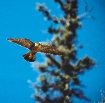
The peregrine falcon is
IDSTRAND
a bird of prey that has
roid can lead to goiter and to changes in meta-
W
been hard hit by persis-
bolism that affect growth and reproduction.
tent organic contami-
Some POPs may affect the breakdown of
STAFFAN
nants.
74
A cast of characters
processes. Metallurgical industries are large
sources to the air, while pulp and paper mills
Persistent Organic
Pollutants
The term `organic contaminants' covers a wide
that use chlorine in the bleaching process often
range of substances. Some are industrial chem-
release contaminated water. A third type of
icals whose toxic character is unintentional.
source is as trace contaminants in chlorophe-
Others are byproducts in industrial processes.
noxy acid herbicides (e.g. Agent Orange), in
The third category includes substances that are
chlorophenol wood preservatives, and in PCB
designed to be toxic, such as pesticides. Many
mixtures (mainly furans).
organic contaminants contain chlorine and are
The toxic mechanism for dioxins and furans
also called organochlorines. Most organochlo-
is the same as for the coplanar PCBs, but some
rines discussed in this chapter have no natural
are considerably more potent. Effects include
sources in the environment.
disturbed reproduction, a suppressed immune
system, and an increased risk of cancer.
Industrial chemicals and byproducts
Hexachlorobenzene
PCBs
Hexachlorobenzene (HCB) is a byproduct in
The term `PCBs' refers to a group of chemicals
the production of chlorine gas and chlorinated
called polychlorinated biphenyls. They were
compounds, including several pesticides. It is
introduced in 1929 and manufactured in the
emitted to the atmosphere in the flue gas from
United States, Japan, the former Soviet Union,
waste incineration, and is also formed by met-
and eastern and western Europe. They are
allurgical processes. It has had limited use as a
chemically stable and heat-resistant, and were
pesticide. The major concerns are porphyria
used world-wide as transformer and capacitor
and effects on reproduction and on the
oils, hydraulic and heat-exchange fluids, lubri-
immune system.
cating and cutting oils, and as plasticizer in
joint sealants. Open use is currently banned in
Brominated flame retardants
all circumpolar countries, but there are still
Many substances that are used as flame retar-
substantial amounts in large capacitors and
dants have chemical properties that are similar
transformers. Current use and disposal are
to PCBs. Polybrominated diphenyl ethers can
often poorly documented.
leach out of flame-retardant-treated textiles,
The toxic effects of PCBs depend on their
electrical equipment, building material, and car
chemical structure. The most toxic PCBs have
interiors to cause diffuse contamination of the
a coplanar configuration, which is similar to
environment. Knowledge about the toxicity of
dioxins (see next subsection). PCBs have a
brominated flame retardants is very limited.
range of toxic effects. The most significant of
these may be that they suppress the immune
Pesticides
system, making animals more likely to become
ill and more likely to die if they are exposed
Many of the pesticides found in animals are
to infections. They can also disturb behavior
organic compounds that have several chlorine
and reproduction in birds, fish, and mammals.
atoms and are very persistent in the environ-
PCBs have contributed to population declines
ment. Pesticides are designed to be toxic to
and health problems in fish-eating mammals
their target organisms. Most of them affect the
in polluted areas, including the beluga in the
nervous system and the liver, and several inter-
St. Lawrence River estuary, seals in the Baltic
fere with reproduction.
Sea, and European otters. The reduced num-
ber of fish-eating birds in the Great Lakes
DDT
region has also been associated with high con-
DDT is a chlorinated organic pesticide, intro-
centrations of PCBs, especially the dioxin-like
duced as an insecticide in 1945. Circumpolar
coplanar PCBs.
countries restricted its use two decades ago,
Other sensitive targets for the toxic effects
but it is still used in pest control programs in
of PCBs include the developing nervous system
southern Asia, Africa, Central and South Ame-
and liver enzymes. PCBs can also act as a can-
rica, and Europe (e.g. Italy). In the past, it has
cer promoter and can cause birth defects.
been used to control mosquitoes and black flies
in the Arctic, and there may still be some use
Dioxins and furans
in remote areas of Siberia, in spite of bans. In
Dioxins (PCDDs) and furans (PCDFs) are a
Russia, household and institutional insecticides
group of chlorinated chemicals, of which 17
that contain DDT and hexachlorocyclohexane
are toxic in minute quantities. They are pri-
are still in use. DDT enters the region via air
marily created in high-temperature processes.
and water currents and in migratory animals.
Waste incinerators without efficient flue-gas
In the environment, DDT is converted to
cleaning systems are or have been one of the
the metabolites DDE and DDD. These are
most significant sources. Wood-burning stoves
stored in fatty tissues of fish, birds, and mam-
and the use of leaded fuel add to the load in
mals. It is the cause of eggshell thinning in
the atmosphere. Dioxins and furans also enter
birds. DDT and its metabolites also disrupt sex
the environment as byproducts of industrial
hormones and affect liver enzymes.
Toxaphene
Mirex
75
Toxaphene is a complex mixture of polychlori-
Mirex was used as an insecticide and fire retar-
Persistent Organic
nated bornanes and camphenes. Until the early
dant, mainly in the United States and Canada,
Pollutants
1980s it was widely used to fight insects in cot-
until 1978. Mirex is highly fat-soluble and per-
ton crops in the United States. Manufacture
sistent in the environment. It is implicated in
and use are now banned in the United States,
cancer and reproductive effects seen in labora-
but similar products are still used in some
tory animals.
parts of the world, including Mexico and
Central America.
Organotins
It is difficult to measure toxaphene in the
Tributyltin (TBT) is an organic compound
environment. The levels in the Arctic are there-
containing the metal tin. It is used as a broad-
fore not well studied, despite the fact that
spectrum killer of algae, fungi, insects, and
toxaphene has been recognized as a persistent
mites. Since the 1960s, TBT has mainly been
organic pollutant of great concern. It may be
used as a marine antifouling agent. It leaches
one of the most abundant pesticides in Arctic
into the water from surface coatings on boats,
wildlife, but limited exposure information and
aquaculture pens, moorings, and industrial
lack of data on toxicological effects make risk
cooling pipes. Other sources are boat repair
assessments difficult.
yards, marinas, and municipal wastewater and
Toxaphene's major toxic effects are on the
sewage sludge. Several countries have banned
nervous system. Fish are extremely sensitive,
the use of TBT for small boats, but interna-
becoming hyperactive with muscular spasms
tional regulations still allow restricted use.
and losing their equilibrium. In experiments,
TBT breaks down rapidly at the sea surface,
fish that have been injected with toxaphene at
with a half-life of only a few days. However, in
levels measured in the environment and then
sediments and especially under cold condi-
released into the wild have lower survival rates
tions, it can remain for much longer, with a
than uncontaminated fish.
half-life of over two years. Sediment can thus
remain a source long after any bans on the use
Chlordane
of TBT have taken effect.
Chlordane is a mixture of compounds that has
TBT is one of the most toxic substances that
been used to protect seeds from insects and for
has been introduced to natural waters. A few
termite control. It is no longer used in most
nanograms per liter are enough to affect dog-
circumpolar countries, but is still produced for
whelk snails. Chronic effects in oysters, mus-
export in the United States. One of the compo-
sels, and crustaceans are observed at exposure
nents of chlordane (heptachlor) breaks down
levels of less than 1 microgram per liter. It is
to a compound (heptachlor epoxide) that is
moderately fat-soluble and can thus bioaccu-
carcinogenic, and has been found in the Arctic
mulate. It is a hormone disrupter that affects
environment. Oxychlordane is another toxic
reproduction.
metabolite. Chlordane affects reproduction
and the immune system.
Less persistent pesticides
A large number of chlorinated pesticides are
Hexachlorocyclohexane/lindane
still used in circumpolar countries and else-
Hexachlorocyclohexane (HCH) has a number
where in the world. These are less persistent
of isomers, of which alpha, beta, and gamma
than their predecessors and do not accumu-
are usually those found in environmental sam-
late or biomagnify to any great extent. Most
ples. The gamma isomer, also called lindane, is
of them have short half-lives in water, soil,
the most potent as an insecticide. Lindane is
and sediment. Nevertheless, many of these
still used in North America, Japan, and Europe
compounds have been found in the Arctic,
to treat seed and in Europe for other purposes.
especially in air, seawater, and sea ice. This
Other forms of the compound were banned in
reflects both their large-scale use ญ in some
the late 1970s. In China and some other coun-
cases over a million kilograms per year ญ and
tries, technical mixtures of different hexachlo-
their transport by winds in a manner similar
rocyclohexanes are still used to treat hardwood
to many of the banned pesticides. Little is
logs and lumber, seeds, vegetables and fruit,
known about whether low light and low
and buildings. Lindane is a neurotoxin. It also
temperatures may make them more persist-
adversely affects reproduction, the liver, and
ent in the polar environment than in tempe-
the immune system, and is a cancer promoter.
rate climates.
Examples of currently used chlorinated pes-
Dieldrin
ticides that have been found in air, lakewater,
Dieldrin is a soil insecticide. It is no longer
fish, seawater, snow, and plants in the Arctic
used in circumpolar countries. Manufacture in
are atrazine, endosulfan, chlorpyrifos, chloro-
Europe, especially for export to developing
thalonil, tetra- and pentachlorophenol, and
countries, continued until the late 1980s. Diel-
methoxychlor. Non-chlorinated pesticides in-
drin is extremely persistent in soil and in biota.
clude the organophosphate terbufos, the
It is the strongest carcinogen of the organo-
phenylamide herbicide metolachlor, and the
chlorine pesticides.
dinitroaniline herbicide trifluralin.
76
Sources and pathways
disappear each decade. Such models are still in
their infancy, but nevertheless provide an indica-
Persistent Organic
Pollutants
The picture of sources and movements of
tion of potential future environmental burdens.
POPs to the Arctic is complex. Most POPs do
The models also show that the propensity of
not move directly from their source to their
different compounds to reach the Arctic via
destination, but cycle around in the global
the atmosphere differs with their chemical
environment as was described for multi-hop
characteristics. Some, such as hexachlorocy-
compounds in the chapter Physical Pathways
clohexane, are more likely to travel all the
of Contaminants Transport. The box below
way, whereas others, such as dioxins, only
gives a further explanation of some of the
reach the far north to a limited extent. In gen-
peculiarities of these contaminants.
eral, only part of the global burden will reach
the Arctic, but this fraction can still create sig-
A global flux among particles, water, and air
nificant problems because of the tendency of
The transport and fate of organic contaminants depend to a large extent on the physi-
organochlorine contaminants to concentrate in
cal-chemical properties of each chemical. One of the key characteristics is the environ-
the fat of Arctic animals and biomagnify in the
ment that a particular molecule prefers. A few compounds are slightly soluble in
food web. This can lead to high levels in top-
water, with hexachlorocyclohexane as a prime example. However, most organic cont-
aminants have an affinity for particles and fatty matrices. Depending on temperature,
level predators, including people. Cold temper-
some of the molecules will favor the gas phase.
atures in the Arctic also seem to create a sink
There is an equilibrium between these abiotic phases, so that some of each contam-
for certain persistent organic pollutants, which
inant is in the air, some in the water, and some is associated with particles. Changes in
may in some cases result in POP levels that are
temperature can alter the equilibrium, and contaminants will move from one phase to
higher in the Arctic than in the source regions.
another. For example, if the temperature rises, POPs from the soil, from the snow
pack, or from the surface water of the ocean will move into the atmosphere. The
This phenomenon is often referred to as the
break-up of ice in the spring also allows for exchange between water and air. Melt-
cold-condensation effect.
water washing over the ground and winds picking up dirt are physical processes that
can move the contaminants.
During the cold winter months, most POPs adhere to particles. In the atmosphere,
Some pesticides
they get carried to the Arctic on haze aerosols that follow major wind currents. In
are still produced and used
summer, when the air warms to 0ฐC or more, some contaminants will be transported
as gases.
The concern about long-range transport of
The further fate of the particles will depend on when snow and rain clean the air,
POPs has led to several political initiatives to
whether contaminants become fixed in the soil or washed away by snowmelt, and
limit the production and use of these chemi-
whether contaminant-laden sediment particles end up in rivers that reach the sea.
cals. To some extent these efforts have been
successful, but it is difficult to get an accurate
Global pool of contaminants
picture of the current global situation. Interna-
is the major source
tional statistics are lacking and some industries
are reluctant to release production numbers.
The major source of most persistent organic
An inventory made by the Governing Council
chemicals to the Arctic today is the residue of
of the United Nations Environment Programme,
widespread contamination of the global envi-
as part of a Global Action Plan, shows that
ronment, the sum of past uses; see table below.
DDT is still produced to control disease-carry-
Modeling the pathways and transport of
ing insects, and that it is also misused for other
POPs gives an indication of how long this glo-
purposes. Chlordane is still produced for ant
bal source will continue to contaminate the Arc-
and termite control, while production of
tic environment. Such a model for DDT shows
aldrin, dieldrin, and endrin has stopped. Mirex
that it will be with us for many decades more.
also appears to be out of production, as does
After a complete global ban, about 10 percent
hexachlorobenzene for use as a pesticide.
of the atmospheric load, 30 percent of the soil
The table below gives a picture of where the
load, and only 1-2 percent of the ocean load will
pesticide hexachlorocyclohexane is still used
including lindane, which is still produced and
Usage of selected pesticides for various periods of time.
ญญญญญญญญญญญญญญญญญญญญญญญญญญญญญญญญญญญญญญญญญญญญญญญญญญ
used in Europe. Available data suggest that
Pesticide
Usage, tonnes
Period
ญญญญญญญญญญญญญญญญญญญญญญญญญญญญญญญญญญญญญญญญญญญญญญญญญญ
Estimated annual usage of alpha-HCH and gamma-HCH
Accounted for
in 1990 for the top-consuming countries.
DDT
1500 000
1948-1993
ญญญญญญญญญญญญญญญญญญญญญญญญญญญญญญญญญญญญญญญญญญญญญญญญญญ
Technical HCH
550 000
1948-1993
Country
Usage, tonnes
40 000
1980
ญญญญญญญญญญญญญญญญญญญญญญญญญญญญญญญญญญญญญญญญญญญญญญญญญญ
29 000
1990
alpha-HCH
Technical lindane
720 000
1948-1993
India
19 880
5 900
1980
Mexico
183
4 000
1990
Ukraine
168
alpha-HCH
28 000
1980
20 400
1990
gamma-HCH
gamma-HCH
11 900
1980
India
4 260
8 400
1990
France
1 860
Toxaphene
450 000
1948-1993
Italy
600
Interpolated
Nigeria
397
DDT
2600 000
1950-1993
Canada
150
990 000
1970-1993
United States
114
Toxaphene
1330 000
1950-1993
China
100
670 000
1970-1993
Spain
96
ญญญญญญญญญญญญญญญญญญญญญญญญญญญญญญญญญญญญญญญญญญญญญญญญญญ
ญญญญญญญญญญญญญญญญญญญญญญญญญญญญญญญญญญญญญญญญญญญญญญญญญญ
India is the major user of lindane and technical
nes of PCBs in unintended open use in Sweden.
77
hexachlorocyclohexane. Other countries may
Elevated levels of PCBs in the air and soil out-
Persistent Organic
also be significant sources.
side these buildings have been documented.
Pollutants
Some of the PCBs have probably ended up in
landfills. The joint sealant was marketed inter-
Pesticides have been used
nationally and used in other countries as well.
for insect control in the Arctic
Other sources of PCBs in old buildings are
Pesticide use in the Arctic has mainly been for
floor paints.
insect control, which has probably occurred in
all circumpolar countries. There is, for exam-
Abandoned military sites
ple, anecdotal evidence of spraying around
are local PCB sources
military installations.
In the Yukon Territory of Canada, the use
Prior to the mid-to-late 1970s, PCBs were
of pesticides has been well documented. Start-
widely used in transformers, capacitors, and
ing in 1948, DDT was applied directly into the
other electrical equipment. Leaks or improper
Yukon River to control mosquitoes and black
disposal are known from the past, occurring,
flies. Several other organochlorine pesticides
for example, at military radar stations.
were also tested. Starting in 1949, the Cana-
In Canada, this use and the consequent local
dian air force sprayed DDT mixed with fuel oil
contamination have been well documented in a
around its bases at Whitehorse and at Watson
study of Distant Early Warning (DEW) Line
Lake. In 1964, ground fogging and the use of
Sites built to detect missiles and bombers head-
capsules of DDT and lindane replaced aerial
ing toward North America. The DEW Line
spraying. However, as a result of pressure
consisted of 63 stations across Alaska, Cana-
from local populations, the aerial spraying of
da, and Greenland, roughly following the 66th
DDT was resumed and continued until 1969,
parallel. At the time the stations were in use,
when DDT was replaced by other insecticides.
no one was concerned about dumping PCB flu-
Drums with leftover DDT have been dumped
ids in the environment. Of an estimated 30
at community landfills and on the shore of the
tonnes of PCBs used in the stations, an un-
Yukon River.
known amount has ended up in their landfills.
DDT was probably used for insect control
Environment Canada and the Canadian De-
around military sites in Alaska as well. In re-
partment of National Defense have attempted
mote areas of Siberia, there may still be some
to clean up some of the stations by taking care
use of DDT for insect control, in spite of bans.
of waste-containing drums, old equipment,
As far as can be determined, no organochlo-
and contaminated soil. However, many sites
rine pesticides have been used in Arctic Nor-
are still contaminated with PCBs, at levels
way or Sweden.
ranging from 1 to 10 000 nanograms per gram
soil. These numbers can be compared to re-
mote background areas with 0.9 nanograms
PCBs are still around
PCBs per gram soil. As is apparent from mea-
in buildings and landfills
surements in soil and plants, the severely cont-
Several compounds that are no longer manu-
aminated soils have served as a source to
factured are nevertheless important when con-
nearby areas.
sidering the sources of Arctic contamination.
Contamination at radar stations is probably
To identify environmental problems that must
not unique to Canada. For example, some Alas-
be dealt with in order to minimize future emis-
kan installations have hazardous waste sites,
sions, AMAP has tried to make a qualitative sur-
measurements near Thule in Greenland show
vey of sources within the circumpolar countries.
elevated levels of PCBs, and the Norwegians
PCB mixtures have been banned from open
have documented elevated PCB levels at dump
use in all circumpolar countries, but in some
sites on Jan Mayen and Svalbard. In Russia, no
countries are still allowed in closed systems
studies to look for possible local contamina-
that existed prior to the ban. Unintentional
tion by PCBs or other POPs have been reported.
open use still occurs. For example, in Norway
650 tonnes are contained in products that are
Power stations, oil platforms, mines,
still around, mostly window sealing compounds
and trains are potential PCB sources
and lighting equipment. Also, 400 to 600 ton-
nes of technical PCBs have been disposed of in
Electrical equipment is also used in power sta-
such a way that they may eventually be released
tions, and old equipment is still a potential
into the environment. This situation is proba-
source of PCBs. For example, in Canada, some
bly not unique to Norway.
temporary wartime power stations and other
Several products used in buildings are leak-
installations in the Yukon Territory are known
ing PCBs into the environment. In Sweden,
to have contaminated the soil locally. An in-
joint sealant that was used in connecting pre-
ventory of PCB contamination in the Yukon
fabricated building elements from 1950 to
Territory has also identified the use of PCB-
1972 contains up to 20 percent PCBs as plasti-
contaminated oil to control dust on the streets
cizer. This is the equivalent of 100 to 500 ton-
of Whitehorse.
Other historical sources include electric
south of the Arctic Circle. In Kirkenes, Nor-
78
trains, which may have spread PCBs along
way, local dioxin contamination has been doc-
Persistent Organic
Pollutants
their tracks from leaking transformers, and
umented in freshwater sediment and in white-
hydraulic and drilling fluids from mines and
fish in a lake near the Syd-Varanger smelter
oil platforms. When a fire destroyed the British
works. These studies show that smelters can be
oil platform Piper Alpha in 1988, five tonnes
significant local sources and that they can also
of PCBs were released into the North Sea.
be important contributors to background lev-
From Svalbard, there are signs that PCBs from
els in the Arctic. The large smelters on the
local sources have spread into nearby fjords.
Kola Peninsula, the Vorkuta area in the north
Komi Republic, and the Norilsk area are also
likely sources of dioxins and furans, although
Arctic smelters and pulp mills
this has not been documented. Other suspected
have contributed dioxins
sources include the secondary iron and steel
Emissions of dioxins and furans are associated
industry, an aluminum industry, and a ferroal-
with industrial activities that occur in the Arc-
loy industry in Arctic Norway, as well as two
tic. Known local sources include iron-ore pel-
smelters in Iceland.
leting plants at Malmberget, Kiruna, and Svap-
Pulp and paper mills located within the Arc-
pavaara in Arctic Sweden, and the smelter
tic Ocean's drainage area that use elemental
R๖nnskไrsverken by the Bothnian Bay just
chlorine in the bleaching process can contri-
bute to the load of dioxins and furans. For
HCH concentrations in air, pg /m3
example, studies in the Arkhangelsk area show
250
Ny-ลlesund, Svalbard, Norway, Apr.-Dec. 1993
local contamination along the Severnaya Dvi-
Tagish
na River and its tributaries. The levels are
200
Dunai Island
fairly low, however, and the pulp mills along
the river are probably not major sources to the
Alert
150
Ny-ลlesund
Arctic Ocean. In North America, studies along
Heimaey
the Peace-Athabasca River system have shown
100
that pulp mills have in the past released diox-
ins and furans, some of which have accumu-
50
lated in the sediments of Great Slave Lake.
gamma-HCH
Other sources of dioxins and furans in the
alpha-HCH
0
Arctic include burning wood for heating and
J
F
M
A
M
J
J
A
S
O
N
D
waste incineration. Forest fires may be an
200
additional natural source.
Alert, Ellesmere Island, Canada, Jan.-Dec. 1993
150
Levels in the air,
100
snow, and rain
50
Air currents are the most important transport
routes by which organic contaminants reach
the Arctic. Measurements of POPs in air can
0
J
F
M
A
M
J
J
A
S
O
N
D
thus be used to identify source regions.
200
Tagish, Yukon, Canada, Jan.-Dec. 1993
Measurements of organic contaminants in pre-
cipitation give important information about
150
how much of the air contamination is scav-
enged and further transported to terrestrial,
100
freshwater, and marine environments.
50
Air measurements point to mid-latitude
POP-use as source to the Arctic
0
J
F
M
A
M
J
J
A
S
O
N
D
Hexachlorocyclohexane is the predominant
100
Dunai Island, Lena River Delta, Russia, Mar.-Dec. 1993
organochlorine in air. The figure left shows
concentrations from five different stations. A
50
summer decrease in some measurements is
probably due to precipitation, which cleans
0
hexachlorocyclohexane out of the air. Spring
J
F
M
A
M
J
J
A
S
O
N
D
Hexachlorocyclohexane
peaks may be related to volatilization from the
100
levels in air showing
Heimaey Island, Iceland, Jan.-Dec. 1995
snow pack.
concentrations of alpha-
Other organochlorines that occur in sub-
HCH (height of light
50
stantial amounts in Arctic air include PCBs,
green bar) and gamma-
HCH (height of dark
toxaphene, and chlordane-related compounds.
green bar).
0
Elevated levels of pesticides, especially lin-
J
F
M
A
M
J
J
A
S
O
N
D
Month
dane and chlordane, have been correlated with
long-range transport from use areas farther
`Clean' air;
79
south. These results, summarized in the map at
low toxaphene
top right, demonstrate that current and past
over NW Pacific
use of organochlorines in the mid-latitudes of
`Clean' air; low chlordane
the northern hemisphere is the most likely
and PCBs across
source to the Arctic environment. The com-
the Arctic Ocean
pounds are resistant to environmental degra-
Elevated
Tagish
dation and have high enough volatility to con-
toxaphene
from US/Canada
tinue to cycle.
west coast
Russian snow and rain have unexpectedly
Elevated PCBs
high levels of PCBs and DDT
and HCH from
Russia/Siberia
Measurements of contaminant levels in snow
Elevated PCBs
provide an indication of how much of the air-
Alert
and HCH from
borne material stays in the Arctic, since snow
Russia/Siberia
is very effective in scavenging particles from
Ny-ลlesund
the atmosphere.
Elevated PCBs
Elevated chlordane
and HCH
Concentrations of DDT and PCBs in snow
originating from
originating from
from the Taimyr Peninsula and Laptev Sea,
US/Canada
Europe and
east coast
western Russia
Russia, in 1995 were about ten times higher
than in the Canadian Arctic, with PCB concen-
trations averaging 10 nanograms per liter.
These high levels are especially alarming con-
sidering that only seven PCB components were
measured; total PCB levels can be much higher.
There may be problems with unintentional
contamination during sampling, and there is a
Except for locally polluted sites, levels in
Pathways and source
need to confirm the high values.
plants are generally low compared to industri-
regions for POP-conta-
The tables show some examples of precipi-
alized areas farther south. PCBs, DDT, and
minated air.
tation measurements.
hexachlorocyclohexane dominate. Although
toxaphene was measured in only one place,
POP concentrations in Russian samples, ng/liter.
ญญญญญญญญญญญญญญญญญญญญญญญญญญญญญญญญญญญญญญญญญญญญญญญญญ
Ellesmere Island, it was the most abundant of
HCH
DDT
PCB
all POPs. Even across small geographic areas,
ญญญญญญญญญญญญญญญญญญญญญญญญญญญญญญญญญญญญญญญญญญญญญญญญญ
Snow, May 1995
there is a gradient from higher concentrations
Taimyr Peninsula
5.61
2.06
5.3
of organochlorines in the south to lower con-
Precipitation, August 1994
centrations in the north. This gradient appears,
Taimyr Peninsula
0.88
3.28
11.98
for example, in data from Finland and from
Laptev Sea
< 0 .18<
1.18
1.1
Ellesmere Island.
Barents Sea
0.67
0.34
4.3
ญญญญญญญญญญญญญญญญญญญญญญญญญญญญญญญญญญญญญญญญญญญญญญญญญ
Measurements in soil have mostly been car-
ried out at sites known to be contaminated, such
Deposition of POPs to snow in Canada, mg/m2/season.
ญญญญญญญญญญญญญญญญญญญญญญญญญญญญญญญญญญญญญญญญญญญญญญญญญ
as the Canadian DEW Line sites. These local
HCH
DDT
PCB
ญญญญญญญญญญญญญญญญญญญญญญญญญญญญญญญญญญญญญญญญญญญญญญญญญ
levels are high enough that the soil can serve as
Alert
1992/93
0.88
0.05
0.19
a source of PCBs to the surrounding ecosystem.
Alert
1993/94
0.50
0.05
0.37
Eureka
1991/92
0.78
0.01
0.26
Mould Bay
1993/94
0.25
0.03
0.23
Cape Dorset
1993/94
0.22
0.06
0.51
Dawson City 1993/94
0.19
0.04
0.41
Whitehorse
1993/94
0.12
0.02
0.20
Tagish
1992/93
0.28
0.01
0.24
Tagish
1993/94
0.20
0.04
0.35
ญญญญญญญญญญญญญญญญญญญญญญญญญญญญญญญญญญญญญญญญญญญญญญญญญ
Levels in terrestrial
environments
The main concern in the terrestrial environ-
ment is that contaminants that end up in
PCBs, ng /g dry weight
plants can be carried through the food web, as
50
7
the plants become food for grazing mammals
6
40
and birds. Plants, especially perennial mosses
5
30
4
and lichens, can also give a good indication of
20
3
Average concentration
how much of the airborne contaminants are
2
of PCBs in moss and
10
deposited to the surface within the Arctic; see
1
lichen.
0
the figure to the right.
0
Mosses
Lichens
Levels in North American caribou show a
80
Caribou and reindeer
more varied geographic picture for PCBs and
Persistent Organic
have low levels of POPs
Pollutants
DDT than for other compounds. This may
Caribou and reindeer feed on ground vegeta-
reflect a greater influence of contaminants
tion and can potentially accumulate contami-
from regional sources in North America rela-
nants from the plants. The major contami-
tive to global distribution.
nants ending up in the animals are hexa-
There is no information about biological
chlorobenzene and hexachlorocyclohexane,
effects of organic contaminants in reindeer/
reflecting the predominance of these contami-
caribou, but in general, the levels are several
nants in atmospheric deposition to their graz-
orders of magnitude lower than those expected
ing areas. The levels seem to be fairly uniform
to cause effects.
across the Arctic; see the figure below. How-
The levels in caribou have also been used to
examine the biomagnification of contaminants
in the terrestrial food chain from lichen to
caribou to wolf. The diagram at the bottom of
this page shows that PCBs accumulate for each
step in the chain and thus that biomagnifica-
tion occurs in the terrestrial environment. A
closer look at the different components of
HCH in caribou /
reindeer liver,
PCBs reveals that wolves are able to break
ng/g wet weight
down some substances, but that the most per-
10
sistent remain.
1
~ 0
Waterfowl carry contaminants
from overwintering areas
Waterfowl and terrestrial game birds and their
eggs are food sources for people as well as for
birds of prey, such as the peregrine falcon. A
study of Canadian waterfowl shows that some
Hexachlorocyclohexane
ever, Russian results from two consecutive
of the birds probably carry substantial burdens
levels in caribou/reindeer
years differ considerably. Excluding Russia,
of contaminants from their overwintering
liver. Russian data are
mean hexachlorobenzene concentrations in the
areas farther south. For example, birds from
based on one individual
dataset for Canada and Svalbard range from
eastern North America have much higher lev-
per site.
0.3 to 3.7 nanograms per gram liver (wet
els than birds from farther west. The tradi-
weight) and hexachlorocyclohexane concen-
tional overwintering areas for eastern birds are
trations range from 0.9 to 8 nanograms per
the Great Lakes, the Gulf of Mexico, and the
gram liver (wet weight) in caribou, which are
eastern American seaboard, which are all rela-
extremely low levels. For Russia, mean hexa-
tively polluted environments. Mirex, which is
chlorobenzene levels range from 0.09 to 7.6
a typical contaminant of the lower Great
nanograms per gram liver and hexachlorocy-
Lakes, only shows up in the eastern birds.
clohexane levels from 0.2 to 7.5 nanograms
In general, the levels in waterfowl are low,
per gram liver, depending on the year.
in the nanogram per gram range (whole body),
For DDT and PCBs, the levels in Russian
but with some exceptions. Birds feeding on fish
reindeer liver (for both years) are higher than
and mollusks have higher levels than those eat-
in other areas, which is also true for other
ing plants, which reflects their higher position
Biomagnification of
PCBs from three sites in
ground-feeding animals such as lemming,
in the food web. Also, oldsquaw, pintail, and
Canada.
ptarmigan, and brant.
some individuals of semipalmated plover have
PCB levels that exceed the thresholds for re-
PCBs,
ng/g lipid weight
productive system effects in other birds.
60
The Canadian peregrine falcon
I๑uvik
50
Cambridge Bay
still suffers from eggshell thinning
Bathurst Island
The peregrine falcon is a predatory bird that
40
has suffered badly from high levels of pesticides
in the environment. This includes the popu-
30
lations of the subspecies that breed in the North
American Arctic, Falco peregrinus tundrius,
20
which feed on waterfowl and small rodents.
Studies in the Canadian Arctic show average
Wolf
PCB levels of 8.3 micrograms per gram and
10
Caribou
DDE levels of 4.5 micrograms per gram egg.
Lichen
It is difficult to know whether Arctic popu-
0
I๑uvik
Cambridge Bay
Bathurst Island
lations are recovering as fully as those in
northern temperate areas. The number of birds
using fat reserves may have released enough
81
is naturally low, and large fluctuations in pop-
DDT and PCBs into the birds' vital organs to
Persistent Organic
ulation size make recovery hard to monitor.
contribute to their deaths.
Pollutants
However, in the early 1990s, contaminant lev-
els in the birds were still high enough to reduce
Fennoscandian birds of prey
eggshell thickness. In 1991, 28 percent of the
are recovering
clutches showed thinning equal to or greater
than the threshold level that has been associ-
In Fennoscandia, white-tailed sea eagle, osprey,
ated with failure to reproduce.
merlin, peregrine falcon, and eagle owl have
Since the early 1980s, in spite of bans on
all suffered from high concentrations of organic
DDT in all the circumpolar countries, eggshell
contaminants. From the 1950s to 1970s, egg-
quality in this population of tundra peregrines
shell thinning and lowered reproductive capa-
has not improved. Levels of DDE, dieldrin,
city led to population declines. For most of the
and heptachlor epoxide were lower in the early
birds, the trend has now reversed and their po-
1990s than in the early 1980s, but female
pulations are starting to recover. This recovery
peregrines had higher levels of PCBs, four
coincides with the decline in environmental
times the maximum value reported in the
levels of DDT and PCBs.
1980s. Moreover, chlordane seems to be in-
While the situation has improved, the prob-
creasing again in the eggs, which is probably a
lems have not disappeared. Merlin from Alta
result of an increased use of this pesticide.
in Norway still have about 10 percent eggshell
The source of the contaminants in peregrine
thinning on average, and in some cases their
falcons is the migratory waterfowl on which the
DDT levels remain high enough to cause con-
peregrines prey. A study at Rankin Inlet show-
cern about reproductive success. Peregrine fal-
ed that levels of PCBs in oldsquaw (long-tailed
cons also have PCB levels above the lowest that
duck) and pintail were high enough to lead to
cause reproductive effects in other birds; see
reproductive effects in peregrine falcons. The
diagram on page 87. There is some concern
threshold levels for DDE were exceeded in old-
about current contaminant levels in the food of
squaw, water pipit, and semipalmated plover.
Norwegian white-tailed sea eagles: PCB (dia-
These birds are especially important in the diet
gram, page 88) and DDT levels in a range of
of female peregrines. Several other contami-
fish species from Arctic sites exceed several of
nants were also detected in the prey, but not at
the guidelines for protecting fish-eating wildlife.
levels high enough to affect peregrine repro-
Studies of a population of peregrine falcons
duction. Predatory birds that feed mostly on
on the Kola Peninsula also conclude that con-
animals resident year-round in the Arctic have
taminant levels are high. Dioxin was found in
much lower levels of contaminants.
concentrations that are associated with embry-
The Committee on the Status of Endangered
onic mortality in other bird species.
Wildlife in Canada previously considered the
tundra peregrine falcon threatened. The status
American mink and marten
has been changed to vulnerable because the
have low contaminant loads
chemical threat did not appear as great as
before. These recent results suggest that the
American mink and marten feed on small
threat is still present.
mammals and fish throughout the forested
region of North America and can potentially
accumulate organic contaminants from both
Icelandic gyrfalcon
terrestrial and freshwater environments. Mink
accumulate POPs with age
are known to accumulate PCBs, to which they
A study of gyrfalcon in Iceland shows that
are extremely sensitive. Even levels as low as
these birds of prey accumulate organic conta-
72 nanograms per gram food can lead to a
minants over their lifetime. Among birds that
failure to reproduce.
were found dead in Iceland, the levels in recent-
The levels of PCBs in American mink and
ly hatched birds were about 100 nanograms
marten in the Arctic are low in most places
DDT and DDE combined per gram muscle. In
that have been investigated. The exception is
ten-month-old birds, the concentration was a
mink from Grand Baleine, Quebec, in eastern
hundred times greater; in 20-month-old birds,
Canada, which have PCB levels that are just
it was a thousand times greater than in the
below the no-effect level for litter size. Also,
hatchlings. Since most of the birds in the study
fish from several lakes have PCB levels that
were young, the average levels in the popula-
may be high enough to cause reproductive
tion could have been even higher than the
effects if they are eaten by mink.
levels reported here. The gyrfalcons are year-
round residents in Iceland but probably feed
Scandinavian mink and otter
on migratory birds that are contaminated.
are bouncing back
The study also showed that the concentra-
tions of PCBs and DDT were higher in leaner
The American mink was introduced to Scandi-
birds than in birds with more fat. Most organic
navia in the 1940s. At first, the population in-
contaminants are normally stored in fat, and
creased rapidly but then leveled off in the 1960s
and declined in the early 1970s. The chief
in fox, probably reflecting generally higher
82
cause of the decline was most likely high expo-
contamination levels in the northern Quebec
Persistent Organic
Pollutants
sure to organic contaminants, particularly
environment in which they were studied.
PCBs. After a 50-percent reduction in environ-
mental levels of PCBs from 1975 to 1978, the
mink population began increasing again.
Levels in freshwater
Otters in the Swedish Arctic are now experi-
environments
encing a similar recovery. The population
declined rapidly from the 1950s to the 1970s,
The freshwater environment reflects the com-
and by 1980 only a few isolated groups sur-
bined input of contaminants from the air and
vived. From the end of the 1980s and into the
from runoff. Most of this contamination is the
1990s, the northern population has suddenly
result of long-range transport from temperate
been increasing again.
industrialized regions. Local contamination is
By analyzing PCB levels in otter muscle, it
a problem in some lakes in the Arctic.
has been possible to determine a threshold
concentration of contaminants above which an
Some Russian rivers and lakes
otter population will suffer. Muscle tissue lev-
seem to be very contaminated with POPs
els above 7.5 to 25 micrograms per gram lipid
lead to population declines, whereas concen-
Hexachlorocyclohexane is the main POP
trations below 7.5 micrograms per gram lipid
detected in river water. The diagram below
allow a population to recover. Norwegian
shows levels of hexachlorocyclohexane in
otter populations that live along the Arctic
rivers from across the Arctic. Most noteworthy
coast fall in the low range and have indeed
are the exceptionally high levels in some Rus-
remained constant or even increased slightly.
sian rivers, especially the Ob. A high ratio of
The levels of PCBs may, however, be high
gamma-hexachlorocyclohexane to alpha-hexa-
enough to affect neurobehavioral develop-
chlorocyclohexane indicates input of the pesti-
ment. Levels of dioxins and dioxin-like PCBs
cide lindane.
in Swedish otter are above those associated
DDT, too, was detected in river water, with
with immunosuppression in seals.
concentrations ranging from 0.03 nanograms
per liter in rivers draining into Hudson Bay to
5 nanograms per liter in the Ob River.
Red fox and wolf
Russian data also include analyses of sus-
The food habits of fox and wolf differ greatly
pended particles. Some of the contaminants
depending on geographic area and time of year.
are present on particles at levels 10 to 100
Red fox typically prey on smaller mammals,
times higher than have been recorded from
but also eat insects, reptiles, fish, and berries.
Canadian or Norwegian rivers. For example,
Wolf packs often follow and hunt caribou. Red
PCB concentrations up to 26.6 micrograms per
fox and wolf samples from Canada contained
gram dry weight and DDT concentrations up
Hexachlorocyclohexane
measurable levels of POPs, of which PCBs
to 2.75 micrograms per gram dry weight have
levels in river water.
were most prominent. The levels were highest
been recorded. Further investigations are
needed before drawing any final conclusions,
Yukon, Canada
Yukon River
but if verified, these data show that some
Mackenzie, Arctic Red
Russian rivers draining into the Arctic Ocean
Mackenzie River delta, Canada
Mackenzie East
are more contaminated than surface waters in
Mackenzie West
urban areas of North America and western
Andrews
Coppermine
Europe. These rivers could constitute a signifi-
Burnside
Central NWT, Canada
Ellice
cant source to the Arctic Ocean.
Back
Hayes
Studies of lake water are only available
Thelon
from a few lakes in Canada and from two
Dubawnt
lakes in Russia. Hexachlorocyclohexane, hexa-
Hudson Bay area, Canada
Kazan
Quoich
chlorobenzene, and toxaphene have been
Lorillard
detected, as have several less-persistent
Orkla
Northern Norway
Vefsna
organochlorines. This suggests that lake water
Alta
can be an important reservoir for water-solu-
Olenek
ble organic contaminants. PCB levels in lake
Lena
Eastern Russia
Yana
water in Canada exceed USEPA quality guide-
Kolyma
lines for protection of aquatic wildlife (0.017
Pechora region, Russia
Pechora
nanograms per liter).
Kola, north
Kola, south/east
The data from Russian lakes, from the Tai-
Kola and White Sea region, Russia
Northern Dvina
myr Peninsula, mirror the high levels of hexa-
Mezen
Ob
Taz
Ob and Yenisey region, Russia
Yenisey
Pyasina
Anabar
HCH, ng / liter 0
5
10
15
20
chlorocyclohexane, DDT, and PCBs that were
83
found in river water. PCB levels are high
enough to exceed Canadian environmental
quality guidelines (1 nanogram per liter).
Again, because of possible quality assurance
problems, these measurements need to be veri-
fied before firm conclusions are drawn.
Lake sediments have low levels of POPs
The figure to the right shows the levels of DDT
and PCBs in lake sediments from remote areas
of the Arctic. Persistent organochlorines appear
in most of the sediments, with concentrations
ranging from 0.01 to 40 nanograms per gram
dry sediment. These concentrations are similar
to or lower than those in sediments from mid-
latitude lakes in North America and much low-
er than those in industrialized areas. One excep-
tion is Wonder Lake in central Alaska (240 na-
nograms PCBs per gram dry sediment), which
may indicate local contamination. The levels in
Wonder Lake are above the median effect range
in environmental guidelines for aquatic life.
PCBs and DDT in lake sediments
Five lakes in Canada, one in Norway (on Bear
Island), and one in Russia (on the Taimyr Pen-
PCBs, ng /g
DDT, ng /g
< 2
< 0.25
insula) exceeded the minimal effect range.
Sediments from a few lakes in northern
2-7
0.25 -1
The southญnorth comparison of available
Finland, Norway, and Sweden also contain
7-15
1-2
data from Canada, Alaska, and Finland shows
dioxins and furans. Air transport from com-
15-25
2-4
that PCB levels in lake sediments decrease six-
bustion sources seems to be the only logical
25-40
4-5.25
> 40
fold from 46ฐN to 81ฐN.
source. The levels in these lakes are about ten
Core samples of lake sediments give a pic-
times higher than in the lakes studied in
PCBs and DDT levels
ture of how the deposition of contaminants
Canada, and similar to background levels in
(dry weight) in surface
has changed over time. PCBs first appear in the
some other areas of Europe.
sediments from remote
lakes.
1940s and their input peaks in the 1970s and
early 1980s, which corresponds to the maxi-
Canadian data point to toxaphene
mum use of PCBs in industrialized areas. In
as a major contaminant in freshwater fish
the Canadian High Arctic, the onset as well as
the peak come somewhat later. This supports
The general picture for animals in freshwater
the idea that time trends in deposition of per-
systems is that levels of organic contaminants
sistent, semi-volatile organic compounds in the
are higher than in the terrestrial environment,
polar region will be delayed and prolonged
but in most cases below levels that would pose
compared with areas closer to the sources.
problems for fish. In a few cases, however, the
Dioxins and furans have also been analyzed
contaminant levels are high enough to affect
in some lake sediments. The levels in all sedi-
the quality of the fish as food.
ments exceeded the Canadian environmental
Based on measurements mostly from
quality guidelines for protecting aquatic life
Canada, the major contaminant in fish is toxa-
(0.09 picograms per gram dry weight). In
phene. There are no known current sources of
Great Slave Lake, Canada, the chemical signa-
toxaphene in the Arctic, and the contamina-
tures point to two different sources: combus-
tion probably derives from long-range trans-
tion and the effluent from bleaching in pulp
port. Levels are highest in fish that feed on
mills in the Peace-Athabasca-Slave River basin.
other fish, such as lake trout and burbot. Bur-
The peak in deposition in the 1950s coincides
bot liver is of special concern because its high
with increased industrial activity in the region
fat content seems to increase its ability to accu-
to the south of the lake, with the introduction
mulate organic compounds. The toxaphene
of two chlorine-bleached kraft pulp mills
levels in burbot measured in Canadian lakes
within the drainage basin, and with the use of
range from 40 to 2300 nanograms per gram
pesticides contaminated with dioxins and
liver. These levels are close to those known to
furans. The mills have since switched to ele-
affect bone development and reproduction in
mental-chlorine-free bleaching.
other fish.
25
30
35
40
45
50
55
84
Persistent Organic
Pollutants
Buchanan Lake
Talurjuac
Somerset Island
Char Lake
Amituk Lake
Peter Lake
Lake Hazen
Sanikiluaq
Mittitimatalik
Salluit
Kongressvannet Diesetvannet
and Linnevann
and Rickardvannet
Thule
(&
Kangiqsujuaq
Nuuk
Inukjuaq
Lake 222
Kola Peninsula
Abiskojaure
Ammasalik
Dwarfs
Normal
Isortoq
(&
ตg/g lipid weight
Kangiqsualujjuaq
2
2
Pahtajไrvi
CHL
CHL
DDT
DDT
1
1
Toxaphene
Toxaphene
Lake Blasjon
PCBs
PCBs
0
0
Landlocked
Migratory
Arctic char
Arctic char
POP levels in landlocked
Freshwater fish also have PCBs, DDT, some
and migratory Arctic
chlordane-related compounds, hexachlorocy-
Levels in
char.
clohexane, and hexachlorobenzene in their
marine environments
bodies. Excluding a few hot spots, the levels of
PCBs in lake trout, a predatory fish, range
The Arctic marine environment collects conta-
from 9 to 450 nanograms per gram. The map
minants from the air, but also from ocean cur-
above shows the contaminant levels in land-
rents, rivers discharging into the Arctic Ocean,
locked and migratory Arctic char.
and sea ice that transports POP-laden particles.
Lake Laberge has high levels of all POPs
Seawater measurements reflect
pathways of contaminant transport
Some hot spots of contamination cannot be
explained by local sources. One such example
The table below presents some examples of
is Lake Laberge in Canada, downstream from
contaminant levels in seawater. Hexachloro-
the community of Whitehorse. The lake is used
cyclohexane dominates the picture, except for
for commercial, sports, and native subsistence
Russian waters where PCB levels are high, up
fishing. Analyses of lake trout, burbot, and
to 15 nanograms per liter in the Kara Sea.
lake whitefish revealed that the levels of PCBs,
These high levels seem to mirror the high input
DDT, and toxaphene were 30 times higher
of PCBs from Russian rivers.
than in other lakes in the Northwest Terri-
Hexachlorocyclohexane levels are highest in
tories, and comparable to contaminant levels
the Canadian Archipelago. The permanent ice
in the severely polluted Great Lakes.
Organochlorine concentrations in seawater, pg/liter.
There have been numerous suggestions
ญญญญญญญญญญญญญญญญญญญญญญญญญญญญญญญญญญญญญญญญญญญญญญญญญญ
about the sources of these contaminants. Cur-
alpha-HCH DDT
PCB
rent scientific opinion is that long-range air
ญญญญญญญญญญญญญญญญญญญญญญญญญญญญญญญญญญญญญญญญญญญญญญญญญญ
transport is the major pathway, which in com-
Norwegian Sea, 1985
2750
<50
<500
Barents Sea, 1992
477
3
38
bination with changes in food-web structure
Laptev Sea, 1994
260
760
2540
has led to significant biomagnification. For ex-
Kara Sea, 1994/95
120-560 50-1250 510-3940
ample, lake trout in Lake Laberge eat only fish
Pechora Sea, 1992
330
270
550
and have much more fat in their bodies than
Canadian Archipelago, 1992 4180
1.0
ญ
lake trout in other lakes in the region. Changes
Bering Sea, 1990
1500
1.0
12
in the food web have been attributed to over-
Bering Sea, 1993
1990
ญ
ญ
Chukchi Sea, 1990
1400
0.3
8.4
fishing and to increased productivity due to
Chukchi Sea, 1993
2060
ญ
ญ
nutrients from the Whitehorse sewage lagoon.
ญญญญญญญญญญญญญญญญญญญญญญญญญญญญญญญญญญญญญญญญญญญญญญญญญญ
alpha-HCH in seawater,
Marine sediments
85
ng / liter
5
are comparatively clean
Persistent Organic
4
Pollutants
3
2
Concentrations of organic contaminants in Arc-
1
0
tic marine sediments are, in general, extremely
Chukchi Sea
Alpha-hexachlorocyclo-
Beaufort
low compared with freshwater sediments, and
hexane concentration in
Sea
ten to a hundred times lower than in the Baltic
seawater increases mov-
Bering
Sea
Sea. The most apparent geographic trends are
ing from south to north,
Okotsk
Sea
that concentrations of PCBs, hexachlorocyclo-
illustrating the cold-con-
densation effect.
hexane, and hexachlorobenzene are higher clos-
North Pacific Ocean
er to the shore along the Norwegian coast than
East China Sea
in the open sea. They are also higher in gulfs and
river mouths along the Russian coast, and
around Svalbard; see figure below. Industrial and
municipal effluent as well as runoff and river
Java Sea
PCB concentrations in
water are probable explanations in some areas.
marine surface sedi-
cover in the Canadian Basin does not allow dis-
In some places, dumping influences local
ments.
solved hexachlorocyclohexane to outgas very
sediment levels. Two examples of PCB-pollu-
PCBs, ng /g dry weight
easily, and the high concentrations in surface
< 0.5
water probably reflect higher hexachlorocyclo-
0.5-1
hexane concentrations in the atmosphere a
1-2
2 -5
decade or so ago. Toxaphene is similarly
5 -9
trapped under the polar ice cap as a `ghost of
>9
the past'. These contaminants will slowly drain
through the Canadian Archipelago over sev-
eral decades. A closer look at seasonal changes
in concentrations also reveals that some
toxaphene probably follows particles settling
on the sea bottom during the summer peak of
productivity.
Levels in seawater can also be used to shed
light on the mechanisms that transport conta-
minants to the Arctic. Detailed measurements
in the Bering and Chukchi Seas (see the figure
above) show that hexachlorocyclohexane lev-
els in the water increase along a southญnorth
gradient. This has been suggested as evidence
for a cold-condensation theory; that semi-
volatile contaminants condense out of the at-
mosphere as temperatures drop. Less volatile
contaminants, such as PCBs, DDT, and chlor-
dane, were present at lower levels in the
Bering and Chukchi Seas than in more tem-
perate latitudes.
Contaminant budget for the Arctic Ocean
Information about levels of contaminants in seawater and river water along with
equations describing exchange with the atmosphere have been used to calculate
73
budgets for hexachlorocyclohexane, toxaphene, and PCBs. The results for hexa-
chlorocyclohexane are presented here. The picture that emerges is that the Arctic
Volatilization
Ocean is in a steady state for gamma-hexachlorocyclohexane and that it is export-
Atmospheric
input
ing alpha-hexachlorocyclohexane. Therefore, we can expect a decline in the large
North American rivers
pool of alpha-hexachlorocyclohexane in the Canadian Basin.
0.2
64
47
For toxaphene, lack of data prevents a detailed mass balance calculation, but
21
Russian rivers
the available information suggests that inputs and outputs of toxaphene are
79
roughly equal. The atmosphere accounts for slightly more than 40 percent of the
input. Volatilization is an important loss process, though most toxaphene is re-
Ice
moved by ocean currents via the Canadian Archipelago and Greenland.
47
The mass balance for PCBs is preliminary and based on some results from
273
4
Russian rivers, that have to be verified. The current picture indicates that inputs
48
exceed outputs by 50 percent. 24 percent of the overall input is via rivers. Some
portion of PCBs is removed by settling particles, but most of the export is via
ocean currents.
97
Arctic Ocean
total HCH budget,
tonnes/year
86
PCBs in seabird eggs,
ตg/g lipid weight
30
Canadian
Canadian
Low Arctic
High Arctic
Svalbard
Troms, Norway
Finnmark, Norway
Canadian
Low Arctic
20
Canadian
High Arctic
Svalbard
10
Finnmark
Troms
5
ot
ar
ot
ake
ake
ake hag
ake hag
S
S
uffin
P
on eider
ing eider
on eider
ing eider
on eider
ing eider
m
K
m
K
m
K
erring gull
H
om
laucous gull
om
laucous gull
om
laucous gull
on guillem
C
G
lack guillem
G
G
B
C
C
orthern fulm
m
N
om
C
lack-legged kittiw
lack-legged kittiw
lack-legged kittiw
lack-legged kittiw
B
B
B
B
PCB concentrations in
ted military sites are Cambridge Bay harbor
vary depending on feeding habits; see the dia-
seabird eggs.
off Victoria Island in Canada and Thule in
gram above. The common eider and king eider,
North Greenland.
which feed on mussels, have the lowest levels,
Dioxins and furans also show up in marine
whereas fish-eating cormorants (shag) have re-
sediment, but at low levels. Concentrations in
latively high levels. Other birds with high levels
the Barents Sea, for example, are ten to twenty
are the glaucous gull, black-legged kittiwake,
times lower than those in the North Sea. The
and puffin. A study of seabird eggs showed
chemical signature suggests that combustion is
that glaucous gulls from Prince Leopold Island
the major source.
in the Canadian High Arctic had organochlo-
rine levels four to ten times higher than other
Marine food webs are not well studied
birds in the area, reflecting their position as a
top predator in the marine food web.
One of the major concerns in the marine envi-
In migratory seabirds, the load of contami-
ronment is that POPs are incorporated in the
nants mirrors migratory habits. Eiders in Low-
fat of small invertebrates low in the food web
Arctic Canada that overwinter off Newfound-
and subsequently accumulated and biomagni-
land and in the Gulf of St. Lawrence, in waters
fied by larger animals. Levels of persistent
that are known to be contaminated, have a con-
organic pollutants in marine food webs are
taminant load that is considerably higher than
poorly studied. Available measurements show
that of populations that overwinter in north-
that contaminant levels in fish are generally
ern, cleaner waters. There is also a general
lower in the Arctic than in temperate seas.
geographic pattern with cleaner birds in the
The highest levels occur in predatory fish,
west of Canada than in the eastern Low Arctic.
high on the food chain. Greenland halibut
A study of birds from Svalbard, the north-
from Canada have levels of toxaphene that are
ern Norwegian coast, and the Kola Peninsula
close to those known to affect bone develop-
found no major differences between the three
ment and reproduction.
areas. The birds may share the same overwin-
tering areas, and contaminants are probably
Military radar sites
well mixed throughout the Barents Sea.
may have contaminated marine fish
Do Arctic marine birds suffer from their
load of toxic compounds, as has been clearly
PCB and DDT levels are high close to several
shown in birds from polluted environments?
military sites and accompanying communities.
In general, contaminant levels in the Arctic are
At Cambridge Bay off Victoria Island in Cana-
lower than in, for example, the Great Lakes
da, a DEW Line radar station has contami-
region, but a study of glaucous gulls from
nated the local marine environment. At this
Svalbard brings some disturbing observations.
site, DDT levels in benthic predatory fish such
Birds that were found dead of unknown causes
as fourhorn sculpins averaged 25 nanograms
had high concentrations of PCBs in their fat.
per gram muscle and PCB levels averaged 50
The birds were probably starved and stressed
nanograms per gram muscle. However, the
before they died, and it could be that the ele-
nearby bays were not contaminant-free, and
vated levels of PCBs in their remaining fat
an analysis of the pattern among the POPs
were high enough to affect vital functions in
showed that rivers can also be a significant
the birds. The levels of contaminants in eggs
source of contamination along the coast.
from species on which the glaucous gull feeds
are higher in Svalbard than in, for example,
Some seabirds
the Canadian High Arctic.
have very high PCB and DDT levels
A comparison to known low-effect levels in
other bird species also causes concern. The
Seabirds breeding in the High Arctic are conta-
diagram at the top of the opposite page shows
minated with the same suite of compounds as
that PCB levels in seabirds from the Canadian
those breeding in temperate regions. The levels
and Norwegian Arctic approach or exceed lev-
21
els that are known to affect reproduction in
PCBs, ตg /g wet weight in eggs
87
other bird species. PCB levels in cormorant
(shag) and fulmar are at or above the low-
16
effect level for embryo deformities and the
15
low- or no-effect level for hatching success.
Puffin, thick-billed murre, common guillemot,
14
black guillemot, and kittiwake have levels that
13
exceed the upper no-effect level for hatching
success. PCB levels in glaucous and herring
12
gulls are even higher and approach or exceed
11
Reproduction*, night heron
the low-effect level for hatching success.
10
Toothed whales have high levels of POPs
9
The levels of contaminants in different species
8
Reproduction**, common tern
of whale also reflect their feeding habits.
Hatching success**, common tern
7
Beluga, narwhal, and harbor porpoise eat fish
and have higher levels of contaminants than
6
Deformities**, cormorant
minke whale, which mostly eat invertebrates.
Egg mortality, deformities**,
Harbor porpoise from Northern Norway
5
herring gull
had the highest levels of PCBs and DDT of any
4
Egg mortality**, bald eagle
of the whales in Arctic waters and were in the
Egg mortality**, cormorant
same range as animals from southern Norway;
3
Seabirds
Birds of prey
see the map below. These PCB levels exceed
Hatching success*, Forster's tern
2
the threshold for immune toxicity. In North
Hatching success**
white
American waters, PCB levels in beluga range
1
leghorn
}
Hatching success*
from 2.6 to 6.0 micrograms per gram blubber.
chicken
Deformities**
0
The levels of contaminants in whales and
)
)
Shag
other Arctic marine mammals are higher in
Eiders
Murre
FulmarPuffin
Merlin
Kittiwake
anatum
tundrius
males than in females and also depend on the
Herring gull
Glaucous gull
Black guillemot
Kola peregrine
age of the animal. Adult female whales usually
Common guillemot
PCB levels in eggs from
have lower levels than adult males. In males,
seabirds and terrestrial
unlike females, the levels increase with age.
Fennoscandian peregrine
Kola white-tailed sea eagle
birds of prey compared
Canadian peregrine (
Canadian peregrine (
Studies of cowญcalf pairs show that whales get
to different thresholds
Norwegian white-tailed sea eagle
a large portion of their load of organochlo-
subtle effects when a lack of food forces whales
for biological effects.
* no-observed-effect
rines very early in life, from their mother's
to burn fat reserves for energy.
level (NOEL)
milk. Females have accumulated large burdens
For assessing effects other than on the liver,
** lowest-observed-
by the time they begin to reproduce, and pass
we must rely on comparisons with known ef-
effect level (LOEL) or
this on in marine mammal milk which is very
fects levels in other species and other tissues;
lowest-observed-
rich in fat. In the newborn calf, this initial dose
adverse-effect level
see the diagram on the next page. The major
(LOAEL).
is further concentrated as the young animal
concern seems to be PCBs, the levels of which
+ refers to average
uses the fat for energy. Only when it starts
range in blubber from 1.9 to 6.3 micrograms
values.
feeding on its own will the contaminants from
per gram lipid. This is higher than the no-effect
the milk be diluted in its body. For the female,
and low-effect levels associated with subtle
nursing the young rids her body of some of its
neurobehavioral effects (assuming that levels
contaminant load, which is why reproducing
in blubber reflect levels in blood serum), but
females have much lower concentrations of
below the no-effect level for reproduction and
organochlorines than males of the same age.
kit survival in mink. PCB levels in fish from
How do the contaminants affect the whales?
some sites are also high enough to cause con-
One study shows that when whales are starved,
cern about effects from the whales' diet.
PCB levels may affect their livers. The whales in
this study had entered a freshwater lake system
when the water was free of ice and were trapped
when winter set in. Their breathing holes be-
came smaller and smaller. By mid-winter, native
hunters decided to harvest the animals. At this
time they weighed about 200 kilograms less that
healthy whales of the same length. This starva-
tion probably forced the whales to use their
blubber fat for energy, which in turn increased
the concentration of PCBs in the remaining fat.
PCBs, ตg / kg blubber
10
A correlation was seen between PCB levels and
Harbor porpoise
PCB concentrations in
the amounts of liver detoxifying enzymes. One
5
blubber from harbor
conclusion is that currently-observed body bur-
Minke whale
porpoise and minke
dens of contaminants can be associated with
0
whale from Norway.
PCBs and DDT in blubber, ตg /g wet weight
Parts of the diet of some seals are also con-
Harp seal
Ringed seal
DDT
taminated enough to cause concern. If seals are
4
as sensitive to PCBs as mink, on which most
PCB
diet studies have been done, several fish species
3
exceed no-effect concentrations for dietary
intake; see left panel below.
2
POP levels in walrus
1
reflect their feeding habits
0
Walrus feed mostly on bottom-dwelling ani-
it
e
g
an
ka
nd
le
rd
ulf
tra
land
om
re
rviat
hu
isko
mals that have low levels of organic contami-
ussia
rfjo
kjanes
N
arrow olm solute u
A
T
D
resby
R
B
e
E
nortalik
valbard
reen
S
Jarfjord
H
gnirtun
co
Ja
W
R
anikiluaqInukjuaq
a
S
S
nants. However, high levels of PCBs in some
S
an
N
udson S G
affin Isla
P
enisey G
H
E
Y
N
B
animals suggest that there are important ex-
N
ceptions. Nineteen of 53 walruses from across
Geographical trends for
DDT and PCBs in harp
the Canadian Arctic had more than 1 micro-
Seals in the Barents Sea are more
and ringed seals (range
gram PCBs per gram blubber. These results
contaminated than in other Arctic regions
averages). The locations
suggest that some walrus probably have ringed
are arranged from west
The most important contaminants in seals are
seal as an important part of their diet. The
to east.
PCBs, chlordane, and DDT. The figure above
high levels were recorded in walrus from east
shows the levels of PCBs and DDT in harp and
Hudson Bay, Foxe Basin, and east Baffin
ringed seals from Arctic waters. The mean
Island. Walrus from Svalbard have levels of
PCB levels range from 0.24 to 5.7 micrograms
PCBs as high as walrus from east Hudson Bay.
per gram blubber. These are higher than in the
No one has studied the biological effects of
Left: PCB levels in food
fish they eat, which shows the role of biomag-
POPs on walrus. However, a comparison of
items compared to thresh-
nification in the Arctic food web, but are still
known-effects levels from otter and mink show
olds for biological effects
much lower than in polluted areas such as the
that walrus from east Hudson Bay and Sval-
and to environmental qual- Baltic Sea. PCB and DDT levels in seals seem
bard exceed the no-effect levels for reproduc-
ity guidelines to protect
fish-eating aquatic wildlife. to increase from west to east, with the highest
tion and kit survival. PCB and dioxin levels in
Right: PCB levels in mam-
levels seen in seals from Svalbard, northern
seal-eating walrus are similar to the lowest lev-
mals compared to differ-
Norway, and Russia. The geographic trend for
els that have been associated with immune
ent threshold for biologi-
hexachloroxyclohexane is the opposite, with
suppression in seals.
cal effects.
* lowest-observed-
the highest levels in Canadian ringed seal.
adverse-effect level
The loads of PCBs in seals are considerably
Polar bears are at risk
** no-observed-effect level lower than those associated with poor repro-
or no-observed-adverse
for immune and reproductive effects
ductive success in seals from polluted areas,
effect level
but exceed the no-effect and low-effect levels
As a top predator in the marine food web, the
EC50 = concentration at
which half of the animals
for subtle neurobehavioral effects in labora-
polar bear could be the species most exposed
in the study were affected.
tory animals; see below right.
to contamination of the Arctic environment.
PCBs in prey species,
PCBs in tissue,
240 000
ng / g wet weight
ng / g lipid weight
10 000
100 000
} EC50 kit survival, liver; mink
Poor reproduction; ringed seal
Peregrine falcon,
} EC50 litter size, liver; mink
highest no-effect
Poor reproduction; harbor seal
concentration in
food
Immune effects**; rhesus monkey
1000
10 000
Kit survival*, muscle; mink
Kit survival*, muscle; otter
US EPA guideline
Visual memory*, human offspring
IJC guideline
100
1000
cord blood serum
Mink, highest
Short-term memory**, human offspring
no-adverse effect
cord blood serum
concentration in food
Canadian
10
freshwater guideline
100
marine guideline
1
10
Freshwater
Marine
Terrestrial
Marine
0.1
1
Pike
Wolf
Sculpin
Caribou
Beluga
Walrus
Narwhal
Lake troutArctic charArctic char
Dab (liver)
Mustelids
Harp seal
Burbot (liver)
Ringed seal
Minke whale
Lake whitefish
Redfish (liver)
Navaga (liver)
Seabird eggs
Broad whitefishArctic cod (liver)
Harbor porpoise
Greenland halibut
Atlantic cod (liver)
Long rough dab (liver)
Ringed seal (blubber)
Polar bear (Svalbard)
Arctic fox (Svalbard)
Polar bear (circumpolar)
Div. Greenland fish (liver)
89
Persistent Organic
Pollutants
Arctic fox
ตg/g
ตg/g
lipid weight
lipid weight
20
0.6
0.4
10
0.2
POP levels in polar bear
0
0
and Arctic fox.
PCBs CHL
HCH CBz
There have been several studies of POP levels
are unknown. It could be a rare natural event,
and possible biological effects in polar bear,
or the result of a hormone-producing tumor in
especially to examine whether POPs damage
the mother, or a consequence of toxic sub-
the ability of bears to conceive and to rear
stances.
their young.
For PCBs, the levels in adult bears are high
Polar bears do indeed accumulate signifi-
enough to exceed the no-effect and low-effect
cant amounts of many organic contaminants.
levels associated with subtle neurobehavioral
The maps above show the results of a recent
effects in offspring of laboratory animals. At
circumpolar study on which biologists and
four of the study sites ญ Svalbard, east Green-
conservation managers from Canada, USA,
land, McClure Strait, and eastern Hudson Bay
Greenland, Russia, and Norway collaborated.
ญ they exceed the PCB levels known to affect
The contaminant levels are high compared
kit survival in mink. At other sites they are
with most other Arctic animals. The median
close to this limit. Polar bears from east Green-
values are 7.2 micrograms PCBs per gram fat,
land, Svalbard, and McClure Strait also have
2.0 micrograms chlordane per gram fat, 0.19
enough PCBs in their bodies to raise serious
micrograms DDE per gram fat, and 0.15
concerns about immune-system effects. Some
micrograms dieldrin per gram fat. These levels
bears on Svalbard have levels exceeding those
are lower than those in seals from highly pol-
associated with poor reproduction in seals.
luted waters such as the Baltic Sea.
Levels of dioxin-like substances in polar bear
In six of the regions included in the study,
from Resolute Bay, Canada, and Svalbard may
PCB concentrations in polar bears are in a
be high enough to affect the immune system.
range that is known to affect the reproduction
Polar bears in Canada have increased liver
of mink, and in some other areas they are
enzyme activity, which has been correlated with
approaching these levels. Even if mink, when
the levels of coplanar PCBs. There are also
compared with other animals, are extremely
some indications that PCBs have affected the
sensitive to organic contaminants, one cannot
thyroid hormone and vitamin A levels. These
discount the risk that PCBs at current levels
biomarkers indicate that the diet of polar bears
affect the reproductive ability of some polar
is probably contaminated enough to affect the
bears. One of the areas where levels in polar
functioning of sensitive hormone systems.
bears are highest is Svalbard, but so far it has
A look at the diet of polar bears supports
not been possible to relate contaminant loads
the concerns raised by POP levels in the polar
in individual female bears on Svalbard to their
bears themselves. The levels of PCBs and
ability to reproduce.
dioxin-like substances in ringed seal blubber
One concern is that polar bear cubs receive
from all sites exceed environmental guidelines
a high dose of POPs from their mothers' milk.
for protecting wildlife. DDT levels exceed
The levels of the fat-soluble compounds are in-
some of the guidelines.
deed very high in cubs of the year, higher even
Arctic fox often scavenge seal carcasses left
than in yearlings. This means that young cubs
by polar bears. They might therefore get just
are exposed at a period of growth and develop-
as much contamination from their food as do
ment when they may be most sensitive. One stu-
polar bears, and be at similar risk for repro-
dy found that the mortality of young polar bears
ductive and immune effects. So far, contami-
on Svalbard was higher than in other areas.
nants in Arctic fox have only been studied on
In 1996, two female cubs accompanying
Svalbard, where their levels are as high or
their mother on Svalbard were noted to have
higher than those of polar bear.
abnormal external genitalia, making them
The circumpolar polar bear study makes it
pseudo-hermaphrodites or hermaphrodites.
possible to look at geographic variations and
The causes behind this abnormal development
to infer possible underlying causes. There are
clear signs of extensive transport of POPs to
Hexachlorocyclohexanes are highest in
90
all areas of the Arctic and subarctic. There are
bears from the Bering and Chukchi Seas,
Persistent Organic
Pollutants
also some notable peaks in concentration. For
which reflects continuing input from Asia.
example, PCB levels in polar bears are highest
Other POPs are generally lower in this region.
on the east coast of Greenland, on Svalbard,
and in the Arctic Ocean. The Greenland and
Svalbard peaks could be caused by combined
Time trends
long-range atmospheric transport of PCBs
from North America and from Europe. Another
Is the burden of contaminants in Arctic ani-
source could be ice that has received contami-
mals increasing or decreasing? Will contami-
nants used in the past continue to move to the
Food-web structure, selective break-down, and stress related to biological effects
Arctic even if use is reduced or discontinued?
The most striking feature of organochlorine levels in Arctic biota is the biomagnifica-
The results from a few long-term studies of
tion that occurs in food webs. The highest levels are usually recorded in top predators
temporal trends in Arctic biota indicate that
in environments with long food chains, such as polar bear, which are third-level car-
PCB and DDT levels in the Arctic environment
nivores in the marine food chain. Extremely high contaminant levels have also been
recorded in bottom-dwelling amphipods that feed on the carcasses of dead animals.
have declined in the past 20 to 25 years, since
This can be contrasted to the short terrestrial food chain, where wolves are only first-
the first controls began on DDT and on the use
level carnivores, and have correspondingly lower contaminant loads.
of PCBs in open systems. Evidence from dated
Many Arctic animals are opportunistic feeders, and may occupy more than one
sediment cores also shows input declines in
position in the food web. Walrus feeding on seals have much higher contaminant loads
subarctic latitudes, as discussed under Lake
than walrus that feed on mussels. Also, changes in food-web structure can affect
contaminant intake. Lake Laberge in Canada illustrates how overfishing and higher
sediments have low levels of POPs.
nutrient input have changed feeding habits of lake trout, resulting in elevated contami-
Sharp declines in PCB and DDT levels were
nant levels.
seen in the 1970s and 1980s, and some time
Not all contaminants biomagnify. In fact, the chemical signatures in top-level
trends indicate continued declines during the
predators, such as the polar bear, reveal that some compounds are effectively degraded
late 1980s and 1990s, whereas others are un-
along the food chain. For example, polar bears can break down DDT, so that their
DDT levels are sometimes lower than those of ringed seal, their main food source.
clear. There are no long-term standardized
Much of the contaminant load is stored in fatty tissues. This fat is used for energy.
data sets for the High Arctic. Levels in biota
When a substantial proportion of the fat is used up, as happens in starvation periods,
are extremely variable, and observed levels are
the concentration of contaminants in the remaining fat increases, with a correspond-
still near the thresholds for biological effects.
ing increase in the concentration in blood and in vital organs. There are some indica-
tions from predatory birds that the combination of a high body burden of contami-
These uncertainties and variabilities make it
nants and prolonged periods of starvation may contribute to the death of an animal.
difficult to speculate about the future, and
reinforce the importance of careful sampling
nants from atmospheric deposition as well as
programs and the need to archive samples for
from the Russian continental shelf. Such trans-
future analysis.
port would also bring PCBs to the Barents Sea
Less is known about time trends for hexa-
and expose the bear population on Svalbard.
chlorocyclohexane, hexachlorobenzene, chlor-
There are parallel observations of high levels
dane, toxaphene, dieldrin, and dioxins and
in ringed seals, which is the main diet of the
furans. Of these, hexachlorocyclohexane has
polar bear.
been followed most closely. In air, there was a
The peak in the Arctic Ocean is more diffi-
nine-fold decrease from 1979 to 1993 in mea-
cult to understand. It could be that the food
surements from the Bering and Chukchi Seas
web in the permanent ice pack has a different
and from several locations in the Canadian
structure than that of coastal and ice-margin
Arctic Archipelago. In the European Arctic,
areas, and is based more on the microscopic
however, alpha-hexachlorocyclohexane levels
animals that live in ice, where they can accu-
seem to have declined two-fold, but lindane
mulate large amounts of contaminants.
levels have increased from 1984 to 1992,
The levels of chlordane in polar bears show
reflecting different regional inputs.
a peak in southeastern Hudson Bay in Canada,
The remainder of this section presents the
which also has the highest DDE and dieldrin
results of some specific time-trend studies.
levels. This is probably a sign of atmospheric
Time trends in pike from
transport to this area in summer from eastern
Lake Storvindeln,
Fish and moss in Scandinavia
Sweden.
and central North America.
show a decreasing contaminant load
Concentration in pike, ng / g lipid weight
Some of the few studies that have been de-
7
0.12
signed specifically to look at time trends in
6
0.10
biota have been conducted in Scandinavia,
HCH
which is probably more representative of the
5
0.08
PCBs
subarctic than of the High Arctic. The studies
4
also may not reflect the load in long-lived
0.06
3 DDT
species such as polar bear and beluga. Fish
0.04
provide the most detailed information.
2
In Sweden, a study of POP levels from 1967
0.02
1
HCB
to 1995 shows a promising trend; see graph to
0
0
the left. The levels of DDT, PCBs, dioxin-like
1970
'75
'80
'85
'90
1995
1970
'75
'80
'85
'90
1995
substances, hexachlorocyclohexane, lindane,
and hexachlorobenzene have all declined, in
or in male narwhal from Lancaster Sound
91
lakes as well as in the Baltic Sea. The decline of
from the mid 1980s to the early 1990s.
Persistent Organic
PCBs is further verified in a Finnish time trend
PCB levels in Arctic fox from Svalbard
Pollutants
study.
seem to have been similar in the 1970s and
The start of the declines in PCBs and DDT,
in the 1980s.
in the 1970s, coincides with decisions to
reduce environmental pollution, and shows the
value of such political efforts. Even in remote
Summary
areas of Arctic Sweden, the sudden decline in
the Russian economy in the late 1980s shows
All persistent organic pollutants in AMAP's
up in the data, as do reductions in the produc-
monitoring program have been found in the
tion and use of pesticides. As a reminder of the
Arctic. The levels are generally lower than in
consequences of renewed use of pesticides,
temperate areas, but for several substances they
spraying of DDT in the former East Germany
are still in concentration ranges in which effects
in the summers of 1983 and 1984 caused read-
on some animals are expected. These include
ily-detectable increases of the contaminant in
reproductive effects in birds from DDT and in
Swedish lakes.
some marine mammals from PCBs and dioxin-
PCBs continue to be a concern. PCB levels
like compounds. Current concentrations in sev-
have not declined as fast as those of pesticides.
eral Arctic species are also close to or above
This indicates a continuing release of PCBs
thresholds known to be associated with immu-
into the environment, and thus a need to take
nosuppressive and neurotoxic effects. The most
action against potential sources.
vulnerable animals are those high in the food
In Norway, moss has been used to look for
web, such as polar bear and birds of prey.
time trends in the deposition of PCBs. In coastal
Biomagnification is one major factor contri-
areas, the mean concentration fell from 21.2
buting to the high levels and biological effects of
nanograms per gram in 1977 to 6.9 nano-
persistent organic pollutants in Arctic animals.
grams per gram in 1990. Because moss takes
Another biological pathway is via migratory
up all its nutrients from the air, this decline
birds that overwinter in polluted environments.
mirrors a decrease in atmospheric PCB concen-
The major source of persistent organic pol-
trations.
lutants in the Arctic is long-range transport via
air currents, as demonstrated by monitoring of
air concentrations. There may also be signifi-
Marine animals
cant sources of some contaminants, such as
show a varied geographic picture
PCBs, DDT, and hexachlorocyclohexane,
Results from monitoring marine animals pro-
within the AMAP region, but these are not
vide good evidence for declining concentra-
well documented. Data from river water and
tions of the major organochlorines in both the
sediments indicate a substantial input from
European and the North American Arctic. For
Russian rivers into the Arctic marine environ-
example, seabirds breeding in northern
ment, but these data must still be verified.
Norway had 60 percent lower levels of hexa-
Available data point to some geographic
chlorobenzene, 85 percent lower levels of
trends. In general, the levels of PCBs and DDT
DDE, and 78 percent lower levels of PCBs in
seem to be higher around Svalbard, in the
the period 1983 to 1993 compared with 1979
southern Barents Sea, and in eastern Green-
to 1981.
land than in, for example, the Canadian High
In the Canadian High Arctic, PCB and DDT
Arctic. Levels of hexachlorocyclohexane appear
levels in eggs of migratory seabirds declined
to be higher in the Canadian Arctic than in
from 1975 to 1993, mostly in the late 1970s
Eurasia. Very limited data from Russia and
and early 1980s. This decline may reflect an
Alaska were available for this assessment. The
overall reduction in organochlorine levels in
lack of circumpolar data limits our under-
the North Atlantic. The decline is not uniform,
standing of sources, transport pathways, and
however. In one of the birds, the ivory gull,
mechanisms for focusing contaminants. The
PCB and chlordane levels in the eggs have
role of sea ice in transporting contaminants
increased.
and then releasing them during melting war-
Declines in POPs in seals and whales from
rants further investigation.
the western Canadian Arctic are not as steep
A few studies of time trends point to a
as those observed in seabirds and whales from
decreasing load of PCBs and DDT in subarctic
eastern Canada. From 1972 to 1991, PCB con-
regions from the 1970s to the 1980s, after use
centrations declined five-fold and DDT con-
of these substances was restricted or banned.
centrations three-fold in marine mammals
However, it is not clear whether this decline
from the western Canadian Arctic.
has continued from the 1980s to the 1990s, or
Over the past 10 to 12 years, seals and wal-
if similar declines have occurred in the High
rus from Eastern Canada and Greenland have
Arctic. The decline seems to be slower for
shown no declines in contaminant levels, nor
PCBs, which may indicate continued low-level
have there been any declines in DDT, PCBs,
leakage to the environment from unknown or
chlordane, or toxaphene in female ringed seal
poorly studied sources.